Nothing Was Missing


Nothing important happened to me the first time I met Kenji.

That is not false modesty or revision – it is the truth. There was no spark, no pause in time, no internal shift announcing significance. He entered my awareness the way most people did then: as a name, an avatar, a presence among many.

Second Life had its own ecosystem by that point, one I moved through instinctively. Clubs pulsed with music and light. DJs rotated through genres like moods – industrial one night, classic rock the next. Hosts greeted newcomers, dancers cycled through animations, regulars staked out familiar corners of the floor.

There were hierarchies, histories, rivalries, families. There were games: Bloodlines clans, roleplay factions, social circles that overlapped and dissolved. It was a world that functioned because people showed up consistently, not because anything extraordinary happened.

I was there to participate, not to search.

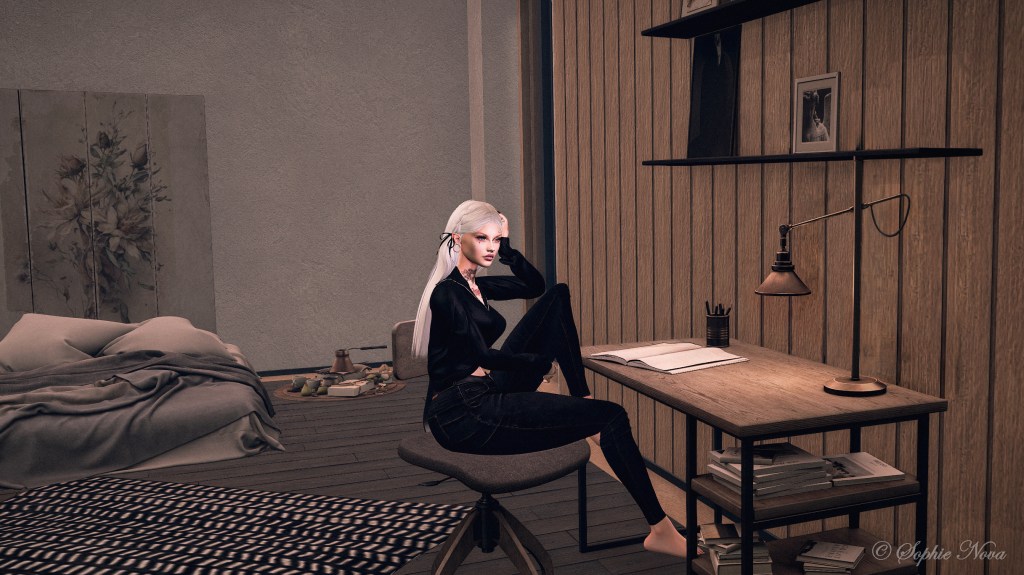
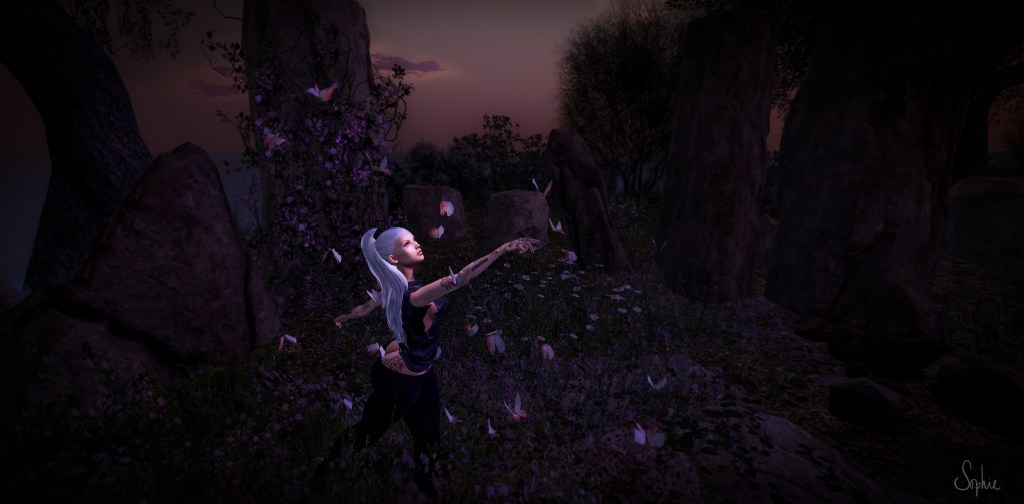
Photography had become my anchor. In a virtual world, images were not just documentation – they were creation. Light, pose, texture, composition – all adjustable, all intentional. I could build a moment from scratch, control atmosphere completely. Where real life had been chaotic, photography offered containment.

I framed scenes carefully. I waited for the right angle, the right expression, the right fall of simulated light. It was not escape; it was focus.

Kenji appeared at a table where a group of us were playing Greedy, a simple card game, casual and social. Everyone introduced themselves the way avatars do, with quick greetings and light banter.

He was with someone else then.
I spoke more to his girlfriend than to him.

He said hello.
I said hello back.

That was it.

No follow-up conversation. No private messages. No significance assigned.

And that mattered.

What I noticed later – only in hindsight – was the absence of pressure. He did not linger. He did not perform. He did not angle for attention or manufacture proximity. He existed comfortably within the group, fully formed and unremarkable in the best way.

In a world where presence often demanded performance, his did not.

Days passed. Weeks shifted. I moved through my routines – hosting shifts, clan activities, late-night conversations with friends, long stretches of silence where I edited photos or built scenes alone. I was not cataloging possibilities. I was not tracking who noticed me.

I was living inside the world without trying to extract anything from it.

Second Life allowed that kind of existence if you let it. Beneath the spectacle and drama, there was infrastructure; people who showed up to work, to play, to create. People who cared about sound quality, lighting, texture resolution. People who debated scripting or argued about sim lag with genuine passion.

Kenji was part of that fabric, not an interruption to it.

When our paths crossed again, it did not feel like fate. It felt like overlap.

Friends shared friends. DJs invited regulars. Groups moved together from one venue to another. You learned who could be relied on to show up, who vanished, who stayed steady.

He stayed steady.

There was no urgency in his presence. No rush toward intimacy. No expectation. No intensity disguised as interest. He existed in the world as someone who belonged there, not as someone searching for connection.

At the time, I didn’t name any of this.
I was not looking.

I did not need meaning assigned to the moment. I did not imagine what would follow. He was simply there… one part of a complex system I trusted because it was familiar.

And in a world built on infinite possibility, sometimes the most important thing a person can be is simply ordinary.


Deliberate Living – Choosing Presence Over Reaction


There was a time when I believed peace was something you stumbled into.
If you were lucky.
If the conditions were right.
If nothing disrupted it.

I don’t believe that anymore.

Deliberate living is not passive.
It is not accidental.
It is not something that happens once the noise finally stops.

It is a choice.

For a long time, my life was shaped by reaction. I responded quickly. I adjusted constantly. I stayed alert, attentive, ready. Even when things looked calm from the outside, my body remained braced—waiting for the next shift, the next demand, the next disruption.

That kind of living leaves little room for intention.
You are always moving, but rarely choosing.

Deliberate living arrived quietly for me. Not as a declaration, but as a series of small refusals. I stopped rushing to explain myself. I stopped filling every silence. I stopped mistaking availability for care. I began asking a different question—not what should I do next? but what actually belongs to me?

The answers were rarely dramatic.

Sometimes they looked like staying in.
Sometimes like leaving early.
Sometimes like sitting still without narrating the moment.

And sometimes, they looked like choosing connection without urgency.

There is a difference between being with someone because you need to be and being with someone because you want to be. One is survival. The other is presence. Deliberate living does not reject closeness—it refines it. It allows space to exist without performance. It allows intimacy without collapse.

I no longer live my life at the edge of reaction. I don’t chase moments. I don’t force meaning into motion. I let things arrive at their own pace, and I trust myself to meet them where I am—not where I think I should be.

Deliberate living is not rigid.
It is not controlling.
It is not a withdrawal from the world.

It is choosing your footing before you take the next step.

It is knowing when to move, and when to stay.
When to speak, and when silence is enough.
When connection feels grounding—and when it feels like disappearance.

This is not the loud kind of living.
It does not announce itself.
But it is steady.

And for the first time in a long time, that steadiness feels like home.

Relearning Choice

For a long time, I believed movement was survival.
Staying busy meant staying safe. Responding quickly meant staying connected. Adjusting meant staying loved.

I had learned to live inside urgency so completely that stillness felt like risk. Even after the restraining order, even after the violence had been named, my body still expected demand.

It took time to understand that safety does not announce itself.
It arrives quietly… and often feels wrong at first.

There was no moment where I declared myself healed. No ceremony marking the return of autonomy. What changed instead was subtle. I began to notice pauses where I once rushed. Spaces where I no longer filled the silence. Invitations I declined without explanation. Messages I did not answer immediately – not as punishment, not as strategy, but because I no longer felt compelled to.

Choice returned in small increments.

In Second Life, I logged in without expectation. I showed up to host shifts, greeted familiar names, danced without watching who watched me back. Music washed over me without becoming a signal. Touch remained virtual, but it no longer carried urgency.

I was present without being exposed.

At first, this felt uncomfortable. Almost irresponsible. I had been trained to believe that love required responsiveness, that care meant availability, that rest was something you earned only after everyone else was settled. Now… there was no one to manage. No volatility to stabilize. No emotional weather system demanding my attention.

Without urgency, I felt exposed.
But exposure was not the same as danger.

I began paying attention to my body in ways I never had before—not to monitor threat, but to register truth. Tightness. Ease. Curiosity. Aversion. I noticed how certain voices, certain styles of attention, still triggered a familiar pull. The instinct to soothe. To explain. To prove.

And I noticed something else, too: how quickly that pull faded when I didn’t follow it.

Intensity, once magnetic, now registered as noise. The sharp edge of charm felt less like excitement and more like pressure. I had learned, finally, that attraction does not have to feel like acceleration. That calm is not the absence of chemistry. It is the presence of safety.

Being alone was not the hardest part.
The hardest part was not performing.

There were evenings when I logged off early simply because I was tired—not emotionally depleted, not overwhelmed, just human-tired. I slept deeply then, dreams unremarkable, uncharged.

Healing, I learned, is not a revelation.
It is repetition.

The body relearns safety through ordinary moments. Through calm that does not spike. Through the sustained absence of threat. Slowly, my instincts recalibrated. What once felt exciting now felt loud. What once felt romantic now felt rushed. I began to trust discomfort again—not as something to override, but as information. I stopped confusing intensity with intimacy.

There was no one to impress. No one to convince. No one whose mood determined the temperature of my day. I was no longer required to be useful in order to belong.

And without that requirement, I faced a quieter question:

Who am I when no one is asking anything of me?

I rebuilt my life deliberately small.
I kept my routines simple. I chose predictability over novelty. I surrounded myself with people who did not demand access to my inner world in exchange for connection. I laughed without scanning the room. I slept without listening for footsteps. I allowed myself to be unremarkable.

That, too, was unfamiliar.

For years, love had been something I survived—something I endured, managed, negotiated. I had mistaken intensity for depth, proximity for intimacy, endurance for devotion. Without realizing it at first, I was learning something else entirely.

Love – real love – does not require collapse.
It does not ask you to disappear to prove you care.
It does not demand urgency to feel alive.
It does not punish pause.

Loneliness still surfaced at times, sharp and unexpected. But it no longer frightened me. I had learned the difference between being alone and being erased. One is a condition. The other is a wound.

I chose solitude over repetition.
I chose quiet over explanation.
I chose to stay inside my own life, even when it felt unfamiliar, even when it felt empty, even when part of me still believed that love was supposed to arrive with force.

What I did not know yet, what I could not have planned for, was that something entirely different becomes possible once urgency releases its grip.

Not because you are searching.
But because you are no longer willing to disappear.

And that is when choice stops being theoretical.
It becomes lived.
Stillness as Choice

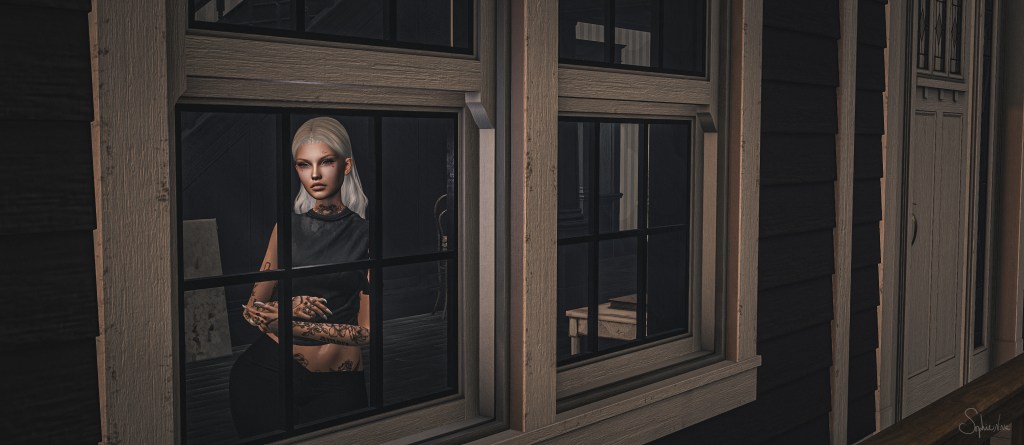
There was a time when stillness didn’t feel like peace.
It felt like waiting.

Waiting for the next shift in the room.
The next mood.
The next demand I couldn’t predict.

But today, stillness feels different.

It isn’t absence.
It isn’t loneliness.
It isn’t the quiet that comes after something breaks.

It’s chosen.

A place I return to on purpose –
not to disappear,
but to come back to myself.

This year, I’m celebrating my birthday with something I didn’t always know how to allow:
space.
No pressure to perform.
No need to explain.
No urgency to fill the silence with proof that I’m okay.

Just breath.
Water moving.
Light on the reeds.
A moment that asks nothing from me.

I used to think strength was staying busy.
Staying useful.
Staying available.

Now I understand strength can look like this:
resting without guilt.
being quiet without fear.
letting the world continue without holding it up.

Nineteen years in Second Life has taught me something unexpected:
that healing isn’t always dramatic.

Sometimes it’s small.
Sometimes it’s ordinary.
Sometimes it’s simply choosing peace, again and again,
until it starts to feel like home.

Tonight, I’m not chasing anything.
I’m not bracing for anything.
I’m not trying to turn the moment into something bigger.

I’m just here.

And for once, that feels like enough.

After the Silence

The house was quiet in a way I did not recognize.
Not peaceful – unnaturally still.

The restraining order created space, but it did not create relief. What it gave me first was silence so abrupt it felt disorienting. There was no noise to manage, no mood to track, no volatility to absorb. The constant vigilance that had shaped my days vanished overnight, and without it, my body did not know how to rest.

Safety, I learned, is not the same as calm.

In the days that followed, I moved through my own life as if it belonged to someone else. I slept lightly. I startled easily. I kept listening for sounds that never came. My mind replayed events I could no longer change, while my body remained braced for impact that did not arrive.

This is the phase people rarely talk about.

After escape comes disorientation. After safety comes grief. After control breaks, there is a vacuum where urgency once lived. I was no longer managing his emotions or negotiating outcomes – but I had not yet relearned how to occupy my own life without apology.

The relationship had ended.
The conditioning had not.

And recovery, I would learn, is not the absence of harm; it is the slow reclaiming of agency.

At night, I slept lightly, waking to imagined sounds. A door creaking. Footsteps that weren’t there. I learned the shape of my house in the dark, every shadow mapped in advance. I lived alert, even in stillness.

And yet, beneath the fear, something else was happening.

The noise was gone.

No messages demanding response. No emotional emergencies requiring immediate attention. No volatility waiting behind ordinary questions. No sense that my presence was required to stabilize someone else’s world.

For the first time in years, my energy belonged to me.

Quiet Recognition

There are moments that don’t ask to be explained.
They don’t arrive with urgency or demand response.
They simply appear –
and something in you recognizes them as true.

A singular moment in time…
no conversation unfolding,
no tension to read,
no anticipation of what comes next.

Just shared space, held gently.
Uninterrupted.

I used to believe connection required motion.
Words. Reassurance. Proof.
That silence meant something was missing.

Now I understand that stillness is not emptiness.
It is presence without performance.

Quiet recognition is not dramatic.
It doesn’t announce itself.
It settles.

In this moment, I am not bracing.
Not managing the temperature of the room.
Not preparing for the next shift.

I am here –
breathing, observing, allowing.

Stillness is where reflection learns how to speak.
Softly.
Without urgency.
Without fear of being misunderstood.

There is a different kind of closeness in moments like this.
One that does not need to prove itself.
One that does not ask to be named.

Tonight, recognition feels like trust.
Not in outcomes.
Not in promises.

But in the quiet certainty of the moment itself.
And that is enough.


Some silences offer rest. Others begin the work.

Prelude

How do you know when you meet someone who will change your life?

So many encounters pass through us without leaving a mark.
Strangers cross our paths every day:
a glance on the street,
a moment at a stoplight,
a door held open,
a quiet thank you exchanged and forgotten.

Thousands of brief intersections,
arriving and dissolving within seconds.

And then there are the meetings that do not pass.

They arrive with a force that feels unmistakable…
a connection so sudden and magnetic it reaches past the surface
and settles somewhere deeper, more essential.

I have often wondered what separates these moments from all the others.
Is it chance, or something more deliberate?
Is there a quiet design at work,
some unspoken alignment between two lives
that draws them together at precisely the right moment?

Serendipity is often defined as luck,
the act of finding something valuable without looking for it.
But I have never been able to accept that the most meaningful encounters in our lives are purely accidental.

There is a particular recognition that comes with them.
An internal shift.
A sudden awareness that something has been set in motion.

When you are honest with yourself, you remember it immediately:
that first meeting that felt different from all the others.
The way your attention sharpened.
The way your thoughts quickened.
The sensation of two inner worlds briefly touching,
as if some quiet exchange took place beneath the words.

I met someone like this once.

I was drawn first to language…
carefully chosen words that carried intention and depth.
I reached out without knowing why, only that I needed to.
What followed was a conversation that unfolded effortlessly,
measured and fluid, like a dance that did not require instruction.

Time lost its edges.
Each sentence opened the door to another.
Ideas moved between us with an ease that felt almost practiced,
as though we were shaping something together rather than speaking separately.

When it ended, the absence was immediate.
A hollow quiet where the energy had been,
not loss, exactly, but the sudden awareness of what had just passed.

In reflecting on it, I understood why the moment lingered.
It was honest.
Unperformative.
Untouched by pretense or expectation.

There was respect in it.
And something raw and unmistakably alive.

I was left with questions, of course –
not the kind that demand answers,
but the kind that stay with you.

Why did we meet?
Was it coincidence, or convergence?
A brief alignment of two inner worlds,
drawn together for reasons that do not announce themselves?

Some encounters are not meant to be explained.
They arrive, alter us, and remain –
quietly shaping who we become next.

Reflection in Stillness

Stillness is where reflection learns how to speak.

Stillness is often mistaken for absence.
For quiet as something empty.
But stillness is where reflection learns how to speak.

Some moments do not ask for movement.
They ask for presence.

In this space -between what has already been released
and what has not yet arrived –
Everything becomes clearer.
Breath slows.
The body remembers itself.
The noise of wanting loosens its grip.

Stillness is not retreat.
It is not waiting.
It is a form of listening.

A way of standing with what is,
without rushing it toward meaning
or away from discomfort.

Here, reflection is not sharp or judgmental.
It is gentle.
It observes without demanding change.

I return to this place when the world feels loud.
When motion begins to feel compulsory.
When I need to remember that strength does not always announce itself.

Sometimes it simply stays.

The storm will come –
It always does.
But stillness prepares us not by resistance,
only by clarity.

And when movement returns,
It does so with intention.